Economists have all but ruled out an interest rate cut from the Reserve Bank of Australia before well into next year, while the chance of another rate increase remains a line-ball call as the central bank waits to see what happens with inflation.
A very slim majority of the 32 economists polled for The Australian Financial Review’s latest quarterly survey said the cash rate had peaked at 4.35 per cent. That’s after three back-to-back rate rises at the start of the year before the RBA held fire at its June board meeting.
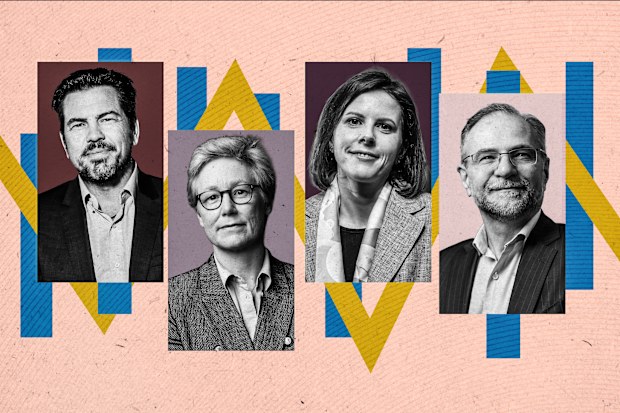
“We expect an extended pause,” said Paul Bloxham, HSBC’s chief economist for Australia and New Zealand. All but one economist tipped the RBA to hold off easing borrowing costs until next year. And 19 – including Bloxham – said it would not happen until the second half of 2027 as the RBA waited for evidence that the rapid-fire rate increases had taken enough heat out of the economy.
Bloxham estimated that it would take at least until the middle of next year for the central bank to be “sufficiently convinced that inflation is heading back to target”.
The RBA has several reasons to hold off from cutting rates for as long as it can, not least because an unexpected pickup in inflation at the end of last year forced the bank into a U-turn as it pivoted from rate cuts to rate increases in just six months.
The lingering threat of the Iran war also looms large after the closure of the Strait of Hormuz triggered the biggest energy shock in history and sent oil prices soaring above $US100 a barrel.
The continuing inflation threat from the conflict will not just delay the RBA from lowering the cash rate, but it has also kept a fourth rate rise on the cards, even for those economists who have officially forecast the bank to remain on hold, such as Australian Retirement Trust’s deputy chief economist, Alexis Gray.
“The decision is on a knife-edge, given uncertainty about the situation in the Middle East,” she said, before adding that the RBA’s “confidence level that it had done enough to slay the inflation dragon” was also critical.
Several economists in the survey said that although the latest peace deal between the US and Iran provided a reprieve on inflation, it failed to resolve key disputes between the two adversaries, including over Tehran’s nuclear program.
This meant tensions could reignite at any point, which would trigger a fresh surge in energy prices – and with it, the possibility of more rate rises.
“The markets are bravely embracing the [peace deal] with stocks back at or near record levels, but the economic reality is that until shipping volumes through the Strait of Hormuz normalise, then stagflation risks will linger,” said Bendigo Bank’s chief economist David Robertson.
He added that the RBA’s chances of delivering one more rate increase before the end of the year were “more likely than not”. Meanwhile, bond market pricing suggests a fourth rate rise to 4.6 per cent will be a close call.
While headline inflation slowed to 4 per cent in May, the bank’s preferred trimmed-mean metric – which strips out volatile price increases – climbed to 3.6 per cent. Traders are pricing in a 56 per cent chance of a rate rise by December, and the odds fade to 19 per cent by August next year.
Minutes from the RBA’s June meeting last week showed the nine-member board had left the door open to future tightening. But the one drag on the economy that the central bank had not counted on was the government’s capital gains tax changes announced in the budget.
The minutes noted that “conditions in the housing market had eased by more than expected” from the CGT reforms and earlier rate increases, which had heaped pressure on house prices and depressed demand for home loans.
Under the new tax rules, the 50 per cent discount on an individual’s CGT bill when they sell an asset will be replaced with a discount calculated in line with inflation, which will increase the tax on home sales.
“The RBA will be on hold this year, with negative economic impact from the federal budget doing some of the RBA’s work in slowing the economy,” said Betashares chief economist David Bassanese. He said inflation was already near its peak.
Attention will now turn to Australia’s quarterly inflation report, due at the end of this month, to gauge how much longer the RBA is likely to keep
monetary policy restrictive.
National Australia Bank chief economist Sally Auld forecast the RBA to remain on hold for the rest of the year, but warned that future economic data releases could put rate rises back on the table.
“If there is evidence that core inflation is annualising about 4 per cent in the second half of the year and the unemployment rate has returned to the 4.1 per cent to 4.3 per cent range, then further rate hikes may be required,” she said.
Of Australia’s big four banks, only Westpac is currently tipping one more rate rise as part of this current tightening cycle. Chief economist Luci Ellis – who was a long-serving assistant governor at the RBA before joining Westpac – forecast the cash rate to climb to 4.85 per cent by the end of the year and does not expect cuts until February 2028.
But while economists are divided on the path of interest rates in Australia, they are less convinced about the US Federal Reserve. Just over a third expect higher rates in the world’s largest economy within the next year, despite new chairman Kevin Warsh vowing to rein in inflation.
Warsh’s hawkish rhetoric – a marked shift from the Fed under Jerome Powell – sent the Australian dollar tumbling below US69¢ as traders raised their bets on US rate increases, which pushed up demand for the greenback.
Just as economists called Warsh’s bluff, they have also gone bullish on the Australian dollar. Forecasters, on average, tipped the local currency to roar back to US72¢ by the end of the year before hitting US73¢ in June next year.
Source: https://www.afr.com/markets/debt-markets/no-rate-cuts-until-2027-as-a-fourth-rise-looms-say-economists-20260618-p6083t